Showing posts with label nonfiction. Show all posts

Friday, June 13, 2014

Strange Case of Edward Gorey

The Strange Case of Edward GoreyThe Strange Case of Edward Gorey by Alexander Theroux
My rating: 2 of 5 stars

While I find Edward Gorey very interesting and like his books and artwork, this book is as much about the author (Theroux) and his opinions as it is about Gorey.  After awhile, while the anecdotes were interesting, the style just grated.  I'd recommend other works about Gorey first.


View all my reviews

Wednesday, April 09, 2014

King Solomon's Ring

King Solomon's Ring: New Light on Animals' WaysKing Solomon's Ring: New Light on Animals' Ways by Konrad Lorenz
My rating: 5 of 5 stars

Humorous and earnest. I really enjoyed Lorenz's adventures with and observations of the animals in his life. I think that for his time (post-WWI and pre-WWII), he was very interested in animal welfare. The book is only dated in that some of the attitudes have shifted toward favoring animal rights and that DNA has changed the study of some animals (like dogs/wolves). Very enjoyable read!

View all my reviews

Wednesday, July 24, 2013

Hedy's Folly

Hedy's Folly: The Life and Breakthrough Inventions of Hedy Lamarr, the Most Beautiful Woman in the WorldHedy's Folly: The Life and Breakthrough Inventions of Hedy Lamarr, the Most Beautiful Woman in the World by Richard Rhodes
My rating: 3 of 5 stars

I liked that the book had a lot of information about George Antheil. I've seen Ballet Mechanique (the film) several times, but hadn't realized that the composer for that music had been Hedy Lamar's co-inventor! :D Not in-depth on either Lamar or Antheil, it's a good overview of the basics of their lives and how they happened to intersect and invent together.

Recommended for people interested in World War II-era inventing, or in Lamar/Antheil's work.

View all my reviews

Saturday, January 05, 2013

Three Essays on the Theory of Sexuality (Freud)

Three Essays on the Theory of SexualityThree Essays on the Theory of Sexuality by Sigmund Freud
My rating: 2 of 5 stars

Again, I find some ideas that were probably ahead of his time (just a handful), others that just demonstrate the scientific state of the study of human & child development - both physically and psychologically - of Freud's time that make me wonder how his theories would change if he were writing today, and then there's others that I suspect stem from the culture of the time/place he's writing in that make me roll my eyes. Reading with the cultural bias of my physical and cultural background, methinks he & the whole Western culture of the time (late 19th to early 20th century) were waaaay too obsessed with masturbation & its supposed ill-effects on one's psychological well-being.

Recommended for those interested in psychology or gender studies, otherwise, I'd probably go with a more general book about Freud and his ideas.

View all my reviews

Friday, January 04, 2013

This Book Is Overdue!

This Book Is Overdue!: How Librarians and Cybrarians Can Save Us AllThis Book Is Overdue!: How Librarians and Cybrarians Can Save Us All by Marilyn Johnson
My rating: 2 of 5 stars

I can tell by the book that Marilyn Johnson is a big library fan. She spends most of the book talking either in sweeping generalizations (librarians are spinsters with buns? Not so! They're hip & tattooed & have blogs and stuff - or spend their off hours in virtual libraries) or in crushingly minute details (does anyone really want to know how many outfits her Second Life avatar has?). The first half of the book is spent "myth busting" the spinster librarian schtick. While it's true that librarians are occasionally annoyed about stereotypes surrounding the profession, she doesn't do much better - while gushing about how hip librarians are (young ones, mind you - around 30 yrs old when she was hovering in 2nd Life around 2006ish) she doesn't acknowledge male librarians at all until about half-way through the book. Most of the men she discusses in the beginning are related to IT, some are librarians & some aren't. What's important is that they're techy. And cool. And defending your privacy. (which is legitimately one of the awesome things about librarians).

Anyway, after the Second Life thing (which is toooo long for such a niche and was pretty much passe before it began), she starts handwringing over libraries changing (in particular the New York Public Library research building changing its role somewhat to allow some (only some) space for circulating collections. She almost whines about DVDs and you can almost hear the "yech!" in her voice when she adds children's story hours, which of course always sound good to Trustees and other people in government. Some collections would not be instantly available, but if the patron was planning a research visit and contacted the library, the materials he/she was interested in would be waiting for him/her when they wanted their stuff. She totally ignores the fact that these (ick!) teens and (ugh!) children as well as people looking for <> DVDs would probably never have come into that building in their entire lives if these changes hadn't been made. A research library only does any good when people use it and its materials.

She complains about budget cuts & several of the librarians she interviews are upset that catalogers in particular non-English languages have been reassigned to other library positions. What she doesn't talk about is that in the budget crisis, the library didn't have to sell its nigh priceless rare books & papers, which are still available to scholars, writers, & everybody who was using them before. Some of the reading rooms have been repurposed & the collections moved, but the collections still exist. The library has changed, but remains intact. No need for handwringing. Please. Libraries are different than they used to be because the public we serve has changed (including writers, thank you very much, many of whom want to be able to have power & wifi for their laptops while researching). That's all. Public librarians are public servants. Though as a profession, we've always tried to shape our public somewhat, the world is changing too quickly now for us to shape the public toward what we want them to be - we need to at the very least meet them halfway. And that as I see it, is nothing to complain about.

Recommended? Not for librarians. I was optimistic by the title & kind of retro cover art. Do NOT be deceived! This might be a good book for a librarian to give to someone who thinks the Internets will soon take over everything & that we'll all live in a paperless society. And drive flying cars. Because everybody already drives the ones with wheels so well. Robot maids!! Wait. That's the Jetsons. I guess I'd recommend it to those people just because I haven't read another that's as accessible about the changes in the profession from about 1995-2009. Just none of it's news to librarians. Sigh... disappointment.

View all my reviews

Wednesday, December 05, 2012

The Fire Next Time

The Fire Next TimeThe Fire Next Time by James Baldwin
My rating: 5 of 5 stars

This book was fantastic & very thought-provoking - sadly for many of the same reasons as when it was published in the early 1960s. It makes me interested to know what Baldwin would write now if he wrote a follow-up. I like to think that some things have changed, but maybe not at that deep psychological or philosophical level. Highly recommended.

View all my reviews

Sunday, May 13, 2012

Art Attack

Art Attack: A Brief Cultural History of the Avant-GardeArt Attack: A Brief Cultural History of the Avant-Garde by Marc Aronson
My rating: 4 of 5 stars

Not a lot of new information here for me, but it's an excellent introduction to the avant garde in the arts during the course of the 19th and 20th centuries. Written with teens & young adults as the target audience, it would also be appropriate for any layperson looking for a place to start on this subject. Very readable. Aronson has done well - the only way it would be better would be if the illustrations were in color.

View all my reviews

Tuesday, May 01, 2012

Wuthering Heights

Wuthering HeightsWuthering Heights by Maggie Berg
My rating: 4 of 5 stars

This book gave me a lot of insight into Wuthering Heights' enduring status as a classic. I think the reason I disliked Wuthering Heights so violently was because I'd always heard it was a love story & that isn't the case at all. Heathcliff is pretty much a psycho and Catherine is a drama queen. Both are definitely narcissistic. Passionate, yes, but still damaged goods (I mean seriously, who'd dig up the corpse of their beloved - twice?). I liked this analysis of the book because it discussed the fact that all the action in the book is interpreted through at least one filter (Lockwood) and mostly through 2 - Lockwood telling us what Nelly told him what she observed and what the other characters told her. I can appreciate the unreliable narrator aspect and I think I can more fully appreciate the text - even though I still find it disturbing.

I would definitely recommend the book - with the caveat that I think the readers should read something else *about* the book also (doesn't have to be this particular work of criticism). I definitely got a lot more out of it that way.

View all my reviews

Monday, April 23, 2012

Annotated Art

Annotated Art: The World's Greatest Paintings Explored and ExplainedAnnotated Art: The World's Greatest Paintings Explored and Explained by Robert Cumming
My rating: 3 of 5 stars

Good for both people new to art & art history and for those who know a bit already. The author discusses the artists' techniques, why the paintings are significant, materials used, and symbolism. There is a lot of information packed into the little annotations! For teens with art assignments, this would be a good place to start researching if the artist or movement is represented within (it covers most of the main developments in painting).

Recommended to people curious about art and who don't want to be intimidated by a longer book. :)

View all my reviews

Friday, April 13, 2012

Organic Gardening!

Rodale's Ultimate Encyclopedia of Organic Gardening: The Indispensable Green Resource for Every GardenerRodale's Ultimate Encyclopedia of Organic Gardening: The Indispensable Green Resource for Every Gardener by Fern Marshall Bradley

My rating: 4 of 5 stars


This is a terrific reference for the home gardener with at least a little bit on just about everything you'd want to know. I plan to pick up a copy for myself to have on hand since we now have more gardening opportunities. :) I will admit I haven't read every page at this point, but did read the articles on the topics relevant to what we're growing right now.

Highly recommended for all gardeners (especially beginners!).


View all my reviews

The Pot and How to Use It

The Pot and How to Use It: The Mystery and Romance of the Rice CookerThe Pot and How to Use It: The Mystery and Romance of the Rice Cooker by Roger Ebert

My rating: 3 of 5 stars


Before going any further, I will admit that there weren't as many recipes as I'd have liked. I know some of that is due to differences between rice cookers' timing mechanisms and other related issues. Still. Essentially, it lets you know that you can use a rice cooker to make a variety of dishes (with rice! ... or noodles, or oatmeal, etc...) as one pot meals without using a stove. A lot of these, though, you can use a slow cooker for or cook on the stove in one pot. It is a nice tool for summer time cooking, though, when you wouldn't want to turn on the oven or stand over a simmering pot on the stove.

All that being said, I give it 3 stars because Ebert and the blog comments he's included are so entertaining. A great culinary quick-read. Recommended for people with rice cookers! :D


View all my reviews

Tuesday, April 03, 2012

Mastering the Art of French Cooking

Mastering the Art of French Cooking (Vol. 1)Mastering the Art of French Cooking by Julia Child

My rating: 5 of 5 stars


Having read through the forward and some of the pre-recipe chapters, I've determined that I like the writing style. Having made a couple of the recipes (a sauce good on fish & eggs and a steak recipe w/sauce), I've determined that this is a cookbook I must own. I will cook fish more often just because that recipe was so good (& simple too). I doubt greatly that I'll cook every recipe a la Julie & Julia, but it is so well put together and so clear that it is really a book that belongs on the shelf of everyone who cooks at home. It pushes you out of your culinary ruts with a nudge and gives a range of possibilities for cooking the same dish over and over, but with variations so it's different every time you bring it to the table. And though some of the dishes take some time, those that I tried did not & dinner was finished within 30 minutes with the addition of a simple green salad or some "steam in bag" veggies that balanced out the fish (or steak) with the richer sauce very nicely.

I think it'd take a very long time to fully appreciate this book, so I'm hoping to receive it for Mother's Day or my birthday this year, but will keep the copy I borrowed from the library until I can't renew it anymore!

A must-own for everyone who cooks at home and those who don't, but love food. If I could give a book 6 stars out of 5, I'd do it.

View all my reviews

Thursday, March 24, 2011

The Genetic Strand

The Genetic Strand: Exploring a Family History Through DNAThe Genetic Strand: Exploring a Family History Through DNA by Edward Ball

My rating: 2 of 5 stars


This isn't quite the book that a brief description makes it out to be. What most of the book does is describe the current state of DNA testing in most of the variations that someone is likely to come across. That it was mostly science-talk didn't bother me - I'm familiar enough with the science around DNA to not be bothered by "the Vocabulary." What did bother me, though, was getting back to what the brief description promises - a book about race and racial tension within multiple generations of a family. In my opinion, the book didn't spend *nearly* enough time with this. I couldn't help but cringe when the author talks about the possibility of having non-white ancestors with some of his family members. They sound really excited about it, but sound so ignorant in their discussion that it's really off-putting.

I also found the implicit white privilege in the whole premise of the book somewhat off-putting too: the well-off white guy finds some family hair in his family heirloom desk (which he finds really bizarre, but I think is fairly common to collect a bit of hair from a first haircut, etc..) and decides to go to the expense of having it DNA tested to see if his family's story about who they are is accurate. While he hoped to find traces of Native American or African ancestry in the DNA samples collected (probably so he'd have the premise for another book), I was struck by the fact that he's *able* to do this, whereas for many of the descendants of the slaves his family held, they *don't* have a long family story and at least some (I won't say many, because I don't know) don't have the means to find out via DNA testing (he doesn't talk about the cost of all the testing in the book).

****SPOILER****
The book doesn't bother me because it's not an apologist work. It bothers me because it's as if he and his relatives covet biological evidence of the mistreatment of the women they held as slaves (or the illicit activities of the white women in their family). The book bothers me because after he's found out that his family is as white as they always thought they were - even if there's no "noble" blood in their family - the book just stops. Oh, huh. DNA testing sometimes makes mistakes - cue skepticism about EVERYTHING related to DNA, blah, blah. It came off as though he's the spoiled kid who didn't get his way and now he doesn't want to play anymore, though it's better written than to sound *whiny*. It bothers me that he wanted to spend the $$ to try to rewrite his family history _because he wanted to_ when most other people (white or not) can't. Just makes it seem like he's not so far removed from his ancestors as he'd like to be - ideologically.


View all my reviews

Friday, February 13, 2009

I Can Has Cheezburger?

I enjoy the website, so I thought I'd take a look at the book. It's a little disappointing. You're better off having the website's RSS feed. Not a complete waste of time, but it was only 15 minutes. The little cartoons are amusing, but I'd have really felt ripped off if I'd purchased it.

Saturday, February 07, 2009

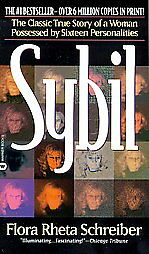
Sybil


This book by Flora Rheta Schreiber chronicles the treatment of a woman with multiple personality disorder & is the classic book that the movie was based on. Recommended for readers interested in mental illness and for people who read books that feature a main character (real or fictional) with massive problems who may or may not come out on top in the end (e.g. A Child Called It, etc., Go Ask Alice, etc...). It's long, but worth it for those readers.

It Ain't All About the Cookin'

This book gives readers the inside story about Paula Deen's life before she became a Food Network celebrity. It recounts her struggles with single parenthood and agoraphobia. I really enjoyed "getting to know" Paula since she goes out of her way to make her television viewers feel as though they'd be welcome in her home. Definitely recommended for Paula's fans and for people interested in reading a memoir of a person overcoming the odds to live the American dream.

Sunday, November 11, 2007

Julie and Julia: My Year of Cooking Dangerously


I selected this book for my library's January book club selection (yes, you can see what a slow-poke I am about my postings if you hadn't already noticed!). Being in my early 30's, I can sympathize with Julie's housekeeping (even though my own apartment has never been quite as bad as hers), her relationship with her husband, and friends. I also am able to sympathize with her desire for "something else" - a challenge, something new, something to blast one out of his/her rut.... something.

I found the book engaging, candid, and at points, laugh-out-loud funny. If you're easily offended by the f-word, you might want to select a different book. While it's not on every page, it's sprinkled throughout the text with some regularity.

Highly recommended for most adults - especially those searching for a way out of their own rut. Perhaps the answers are simpler than we think.

Mayflower: A Story of Courage, Community, & War

In this non-fiction title by Nathaniel Philbrick, which won the National Book Award in 2oo6, we return to those American icons, the Pilgrims. Philbrick's engaging prose puts the formation of the Plymouth colony and the Pilgrims' interactions and their relationship with the Native Americans under a historical microscope. (I am imagining an extra diminutive Miles Standish wriggling on a glass slide, but that's beside the point).

This is the only balanced book I've encountered on this subject. The Pilgrims and later, other English colonists, are all too human. Philbrick doesn't venerate the Pilgrims, nor does he vilify them. He treats the Native Americans in the same way and describes as best as possible the cooperation and conflicts that occurred. He doesn't entirely step away to allow the reader to draw his/her own conclusions, but draws us readers into the past to see events as they played out without making heroes or villains of anyone.

The conclusions drawn (at the end in the last chapter) point toward the possibility of living together in a tolerant, cooperative, mutually beneficial society. That this is possible - it was at one point and could be again. Perhaps that's what drew so many readers to the book last year and why it remains so popular at this time. We Americans (and most other people in the world too I believe) want to live in peace with our world neighbors even though our belief systems are different and our cultural values differ. Working together, we can build a world where we all can thrive.

Tuesday, August 28, 2007

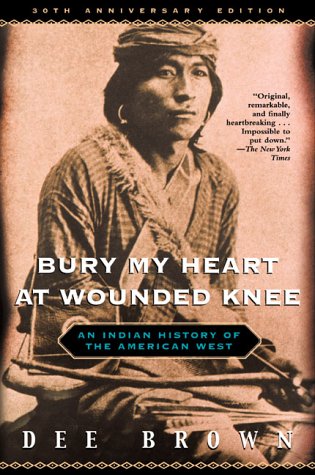
Bury My Heart at Wounded Knee


I know this is a mini-series documentary now, but this book by Dee Brown is very powerful in its own right. It took me a long time to finish less because it's a long book, but more because I could only read so much about irrational, unfounded savagery on the part of our nation's white imperialists from the past at any given time. I'd say that this would definitely round out any curriculum on the settling of the West (obviously at a high school or higher level - just because I don't think a class of elementary school kids could make it through the book).

Hugely worthwhile for all Americans able to read the book. The prose is not light (by any stretch of the imagination), but is very readable & isn't difficult to read in a technical sense. Highly, highly recommended.

Saturday, January 20, 2007

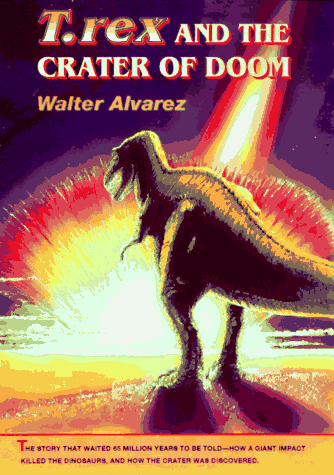
T. Rex and the Crater of Doom


Walter Alvarez's book is a great discovery story! Well-written for the lay audience, it captures one's attention and takes readers through the many dead ends and ultimately, discoveries, that make up science and the process that scientists go through formulating and testing their ideas.

Highly recommended for all science lovers, dinosaur buffs (if you haven't read it already!), everyone wanting to find out more about the world around us, and of course, anyone who's ever wondered what really happened to the dinosaurs.